Sunscreen Guide: Choose the Right Protection for Your Skin Type and Activity Level


Sunscreen Guide: Choose the Right Protection for Your Skin Type and Activity Level
New Zealand’s sun is famously strong. With high UV levels even on cloudy days, protecting your skin is essential all year round. Sunscreen is one of the most effective ways to prevent sunburn, premature ageing, and skin cancer — but choosing the right one can be confusing. Should you go for SPF 15, 30, or 50+? And which type suits your skin and lifestyle best? Here’s a guide to help you find the sunscreen that fits you.
Know Your Skin Type
Before picking a sunscreen, it’s important to understand your skin type. How your skin reacts to sunlight determines the level of protection you need.
- Very fair skin (Type I–II) – burns easily and rarely tans. Always use high protection (SPF 30–50+), and avoid direct sun between 10 a.m. and 4 p.m.
- Medium skin (Type III) – may burn at first but can develop a light tan. SPF 20–30 is usually suitable.
- Darker skin (Type IV–VI) – rarely burns but still needs protection. SPF 15–20 is often enough, especially for longer outdoor exposure.
In New Zealand, you should apply sunscreen whenever the UV index is 3 or higher — which can happen even in spring and autumn.
Læs også:

Understanding SPF
SPF stands for Sun Protection Factor. It indicates how much longer you can stay in the sun without burning compared to unprotected skin. For example, SPF 30 theoretically allows you to stay in the sun 30 times longer — but only if you apply enough and reapply regularly.
As a general guide:
- Use SPF 15 for short daily exposure, such as commuting or running errands.
- Use SPF 30–50+ for extended outdoor activities, sports, or beach days.
Apply sunscreen generously — about a handful for your whole body — and reapply every two hours, or after swimming, sweating, or towel-drying.
Match Your Sunscreen to Your Activity Level
Your daily routine and activities influence which sunscreen works best for you.
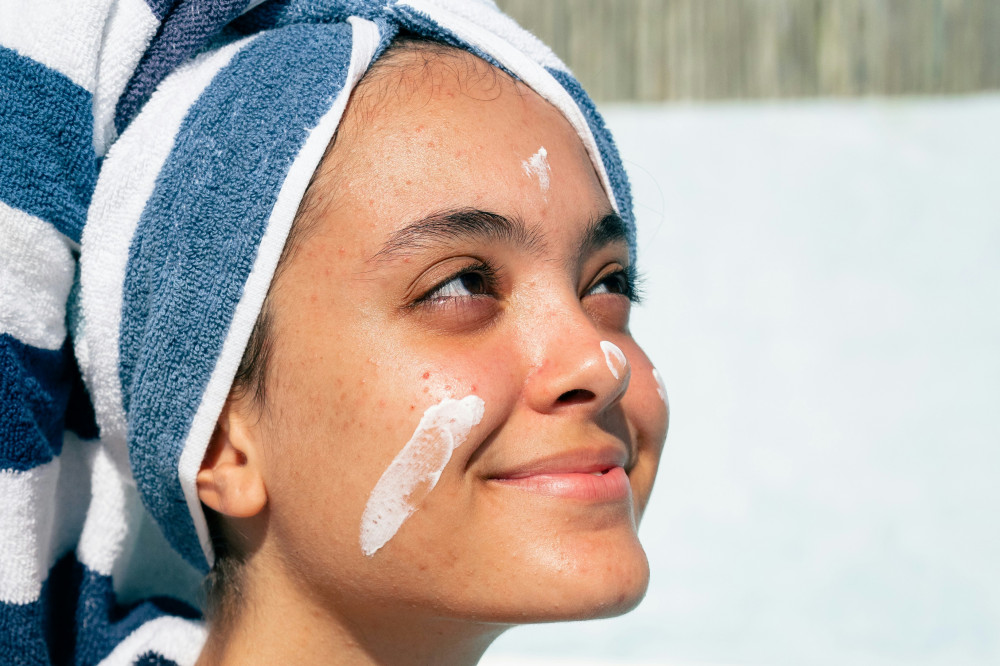
- Everyday use: A lightweight moisturiser or facial sunscreen with SPF 15–30 is ideal. It feels comfortable under makeup and protects against incidental UV exposure.
- Outdoor work or sports: Choose a water-resistant sunscreen that can handle sweat and movement. Look for labels like “sport” or “water resistant.”
- Beach and swimming: Go for a high SPF (30–50+) and a water-resistant formula. Reapply after every swim.
- For children: Kids’ skin is more sensitive, so always use SPF 30–50+, fragrance-free formulas, and combine with hats and protective clothing.
Chemical or Physical Filters?
Sunscreens protect your skin in two main ways:
- Chemical filters absorb UV rays and convert them into heat. They spread easily and feel light on the skin.
- Physical (mineral) filters reflect UV rays like tiny mirrors. They’re great for sensitive skin but can leave a slight white tint.
If you have allergies or easily irritated skin, opt for a fragrance-free mineral sunscreen.
How to Apply Sunscreen Correctly
Many people don’t get full protection because they use too little. Follow these simple steps:
- Apply sunscreen 20–30 minutes before going outside.
- Use plenty — about one teaspoon for your face and neck, and a handful for your body.
- Don’t forget ears, feet, back of the neck, and hands.
- Reapply every two hours, and always after swimming, sweating, or towel-drying.
When in doubt, use more rather than less.
Sun Protection Is More Than Sunscreen
Sunscreen is vital, but it works best as part of a broader sun safety routine:
- Seek shade between 10 a.m. and 4 p.m., when UV levels are highest.
- Wear a wide-brimmed hat, sunglasses, and lightweight clothing that covers your shoulders and arms.
- Keep a close eye on children — their skin burns faster than adults’.
Remember, sun protection isn’t about avoiding the sun altogether; it’s about enjoying it safely.
Find Your Personal Sun Routine
The best sunscreen is the one you’ll actually use. Experiment with different textures — lotion, spray, gel, or stick — to find what feels best. Some prefer a matte facial sunscreen and a spray for the body; others like an all-in-one daily moisturiser with SPF.
By making sunscreen part of your morning routine, you protect your skin not only from sunburn but also from long-term damage like wrinkles and pigmentation. It’s a small daily habit with big benefits — helping you enjoy New Zealand’s sunshine safely, every day.
Læs også: